


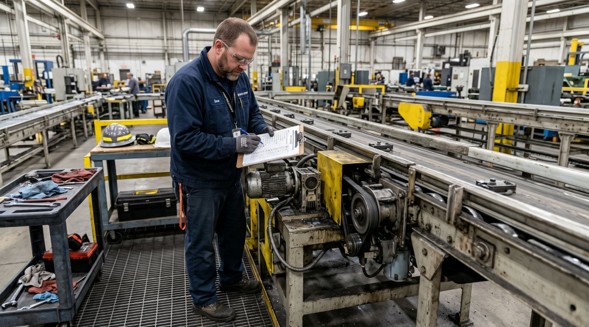
In a busy warehouse, garment distribution center, commercial laundry, or manufacturing plant, material handling equipment carries the operational workload. A single failed component (whether a seized roller, a worn power module/gearbox, or a frayed conveyor belt surface) can halt an entire production line, stall order fulfillment, and trigger costly emergency repairs.
Unplanned downtime rarely happens without warning. More often, it is the result of gradual wear and tear that went unnoticed during daily operations. Implementing a proactive preventive maintenance checklist allows facility managers to identify minor mechanical issues before they escalate into catastrophic system failures.
Understanding how to structure a conveyor system maintenance checklist protects your capital investment, improves worker safety, and keeps your material handling technologies operating smoothly.
The Core Components of Conveyor Maintenance
An effective maintenance strategy relies on a consistent maintenance schedule divided into daily inspections, routine mechanical adjustments, and long-term machine health monitoring. Maintenance teams must evaluate four critical areas: drive components, tracking alignment, belt condition, and structural supports. Let’s take a closer look at them and why they are important.
1. Motors and Drives
The drive system provides the mechanical energy needed to move loads across your conveyor application. Because drive components operate under constant stress, regular inspection is critical to prevent sudden motor failure or gear binding.
- Motors and Drives: Check for excessive vibration, abnormal noise, or elevated operating temperatures. Inspect electrical connections for signs of corrosion or loose wiring.
- Power Module/Gearbox: Verify oil levels in gearboxes, inspect for external leaks around seals, and check the oil in reducers according to manufacturer guidelines.
- Drive Sprocket and Sheave Alignment: Inspect the drive sprocket for tooth wear and verify sheave alignment to prevent premature drive chain failure. Measure drive torque to confirm the system operates within design limits.
- Lubrication Products: Apply appropriate industrial lubrication products to external bearings, drive chains, and mechanical pivot points to reduce friction and heat.
2. Belt Tracking & Alignment
Belt mistracking is one of the most common causes of premature belt wear and structural damage. When a belt shifts off-center, edge friction can shred the material, spill loads, and damage adjacent frame supports.
- Belt Alignment: Perform daily inspections to observe belt tracking while the system runs empty and under a full load distribution. Pay close attention to tracking at the head and tail pulleys.
- Automatic Belt Tracking Devices: Clean optical photo eyes and test automated tracking systems to confirm sensors correctly signal automatic belt tracking devices to make minor alignment adjustments.
- Belt Tensioning: Check drive belt tension to ensure the system maintains proper grip on the drive pulley. Correct tensioning prevents belt slippage, which causes excessive heat buildup and speed fluctuations.
- Transfer Points: Clear debris accumulation around transfer points, drop zones, and impact cradles. Uneven material accumulation at transfer points often forces the belt out of alignment.
3. Belt Surface & Edges
The conveyor belt surface takes direct impact from products, totes, or garments. Identifying surface fatigue early allows maintenance crews to schedule planned belt repairs rather than dealing with a snapped belt during a peak operational shift.
- Belt Wear: Inspect top and bottom covers for gouges, deep scratches, chemical breakdown, or edge fraying caused by belt misalignment.
- Belt’s Lacing and Joints: Inspect mechanical splices and the belt’s lacing for loose fasteners, pulling hooks, or cracking. For vulcanized splices, check for ply separation.
- Material Carry-Back: Inspect belt scrapers, wipers, and dust containment systems. Material carry-back creates buildup on return rollers, leading to roller seizure and tracking errors.
- Specialty Belts: Specialized belts (including food-grade belts, cold-resistant belts, chemical-resistant belts, and static-dissipative belts) require specific sanitization protocols and surface care to retain their performance characteristics.
4. Rollers, Bearings, and Conveyor Structure
Carrying rollers and return idlers maintain belt elevation and load balance across the entire run.
- Roller Condition: Listen for grinding or chirping sounds that indicate bearing wear. A seized roller creates continuous friction against the moving belt, leading to localized belt wear or fires.
- Bearings and Motor Replacement: Grease pillow block and flange bearings on a strict schedule. Excessive play or heat generation indicates impending bearing failure that requires prompt bearings and motor replacement.
- Conveyor Structure: Inspect structural steel frames, hanging supports, and floor mounts for loose hardware, structural distortion, or corrosion.
- Sensors and Remote Monitoring Systems: Clean optical lenses on photo eyes, check proximity switches, and review diagnostics from machine health monitoring or remote monitoring systems to ensure accurate package detection.
Safety Mechanisms and OSHA Regulations
Equipment reliability should never come at the expense of worker safety. A comprehensive inspection checklist must include functional checks of all integrated safety devices to ensure full compliance with OSHA regulations and internal safety procedures.
- Emergency Stops: Test all emergency stops, pull cords, and safety switches during daily inspections to verify immediate drive cutoff.
- Machine Guard Placement: Verify that all safety guards, side covers, and protective enclosures around drive sprockets, pinch points, and rotating shafts are securely bolted in place.
- Conveyor Lockout: Ensure maintenance personnel strictly follow standardized conveyor lockout / tagout (LOTO) protocols before clearing jams, performing electrical inspections, or executing belt repairs.
- Safety Labels: Replace damaged or faded safety labels, warning decals, and emergency response protocols posted along the conveyor run.
Maintenance Schedules: Daily, Monthly, and Annual Checks
A successful preventative maintenance strategy balances quick daily visual checks with thorough periodic overhauls.
- Daily Inspections: Focus on safety mechanisms, testing emergency stops, checking belt alignment, monitoring for unusual drive noise, and clearing debris from photo eyes.
- Monthly Maintenance: Focus on mechanical drive components. Inspect the power module/gearbox, check oil in reducers, test drive belt tension, inspect roller condition, and check machine guard placement.
- Quarterly & Annual Inspections: Perform complete structural alignments, inspect the belt’s lacing, check electrical connections, evaluate bearings and motor replacement needs, and audit stock levels of critical spare parts.
Turnkey Material Handling Support with SRS Conveyors
While a detailed maintenance plan extends equipment lifespan, long-term efficiency depends on proper system design, quality components, and reliable technical support.
Since 1962, SRS Conveyors has designed, engineered, manufactured, installed, and serviced custom material handling solutions across North America. Supporting industries ranging from garment distribution, commercial laundries, and e-commerce distribution centers to manufacturing and hospitality operations, SRS Conveyors provides complete turnkey support.
Whether your facility relies on Monoveyors 8000 Series overhead systems, Power and Free 8500 Series conveyors, All-Flex enclosed track systems, or specialized garment-on-hanger handling lines, SRS Conveyors offers the technical expertise to keep your operations moving. From initial system design, controls integration, and installation to replacement parts supply and preventative maintenance assistance, SRS Conveyors helps facility managers optimize layout, protect throughput, and control maintenance costs.
Optimize Your Facility Operations with SRS Conveyors
A proactive conveyor system maintenance checklist minimizes unplanned downtime, protects your workforce, and extends the service life of your industrial equipment. If you are evaluating an existing conveyor system, looking to source high-quality replacement parts, or planning a custom conveyor solution for your facility, contact SRS Conveyors today to speak with an experienced material handling specialist.